Brand Licensing Agreements: How to Monetize Your IP Without Selling It
What is an Brand Licensing Agreements In?
A brand licensing agreement is a legal contract under the Indian Contract Act 1872 that grants a licensee the right to use the licensor's trademark, brand assets, and intellectual property in exchange for royalties.
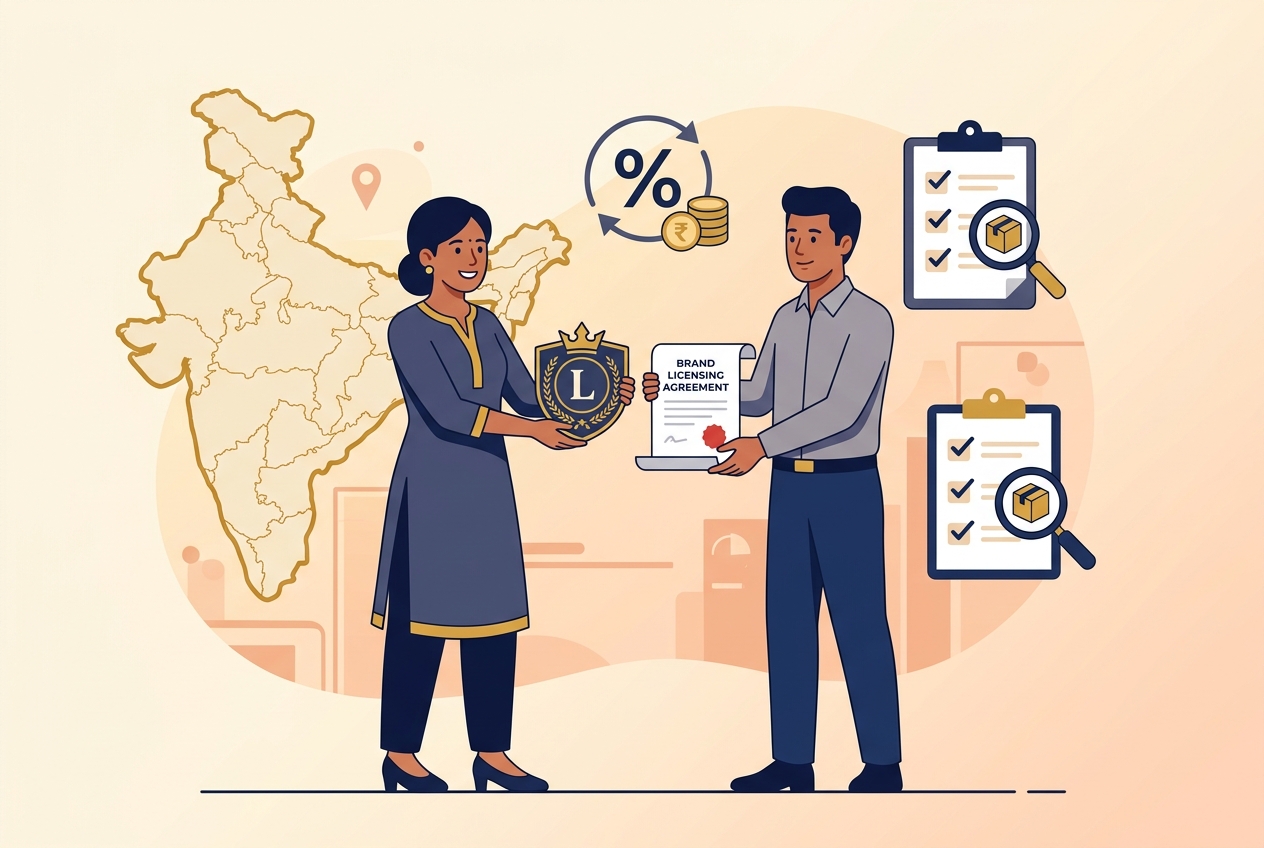
A Brand Licensing Agreement allows you (the Licensor) to let another company (the Licensee) use your brand name, logo, or characters on their products in exchange for a fee (Royalty). It's a powerful way to expand into new markets without the risk or cost of manufacturing.
1. Key Elements of a Licensing Agreement
Every licensing deal must clearly define the "who, what, where, and how much".
- Grant of Rights: What exactly can they use? Only the logo? The name? The tagline?
- Territory: Where can they sell? Only in India? Or globally? Restricting territory prevents them from competing with you in other markets.
- Exclusivity:
- Exclusive: Only they can use it (you can't even use it yourself in that category/region).
- Non-Exclusive: You can license the same rights to others.
2. Royalties & Financials
This is how you get paid. Structuring this correctly is vital.
- Upfront Fee: A lump sum paid upon signing.
- Royalty Rate: Usually a percentage of Net Sales (e.g., 5-15%). Be careful defining "Net Sales" to avoid sneaky deductions.
- Minimum Guarantee (MG): The minimum amount the Licensee must pay you, regardless of how much they actually sell. This ensures they are serious about pushing your product.
3. Quality Control (The Most Important Clause)
You MUST retain the right to approve or reject products. Usually involves:
- Pre-Production Samples: Licensee must send prototypes for approval before mass manufacturing.
- Marketing Materials: Approval required for ads using your logo.
- Right to Audit: You can inspect their factory or books to ensure compliance.
4. Termination & Sell-Off Period
What happens when the deal ends?
- Termination for Cause: Immediate end if they damage your brand or stop paying royalties.
- Sell-Off Period: A limited time (e.g., 3-6 months) after termination for the Licensee to sell their remaining inventory. After this, they must destroy unsold goods.
Likely Pitfalls
- Naked Licensing: Failing to exercise quality control can lead to legal abandonment of your trademark rights.
- Vague Territory: "Asia" is vague. List specific countries.
- Sub-Licensing: Allowing the Licensee to pass rights to others without your approval. Always prohibit or strictly control this.
Frequently Asked Questions (FAQ)
What is a typical royalty rate?
It varies widely by industry. Fashion/Apparel is often 8-12%, while Art/Design can be 3-6%. Always research industry standards.
Can I license my brand to a competitor?
Yes, it's called "Co-Branding" or strategic partnership. However, ensure strict non-compete clauses for your core products.
How do I audit royalties?
Includes an "Audit Clause" allowing an independent accountant to check their sales records once a year. If underpayment >5% is found, they pay for the audit too.
Don't Sign Blindly. Protect Yourself.
Templates are just a start. Use Contract Shield's AI to scan your contract for hidden risks, unfair clauses, and Indian legal compliance issues — in 60 seconds.
Analyze Your Contract Free →