Dispute Resolution
Cheque Bounce Notice Format & Section 138 NI Act Guide
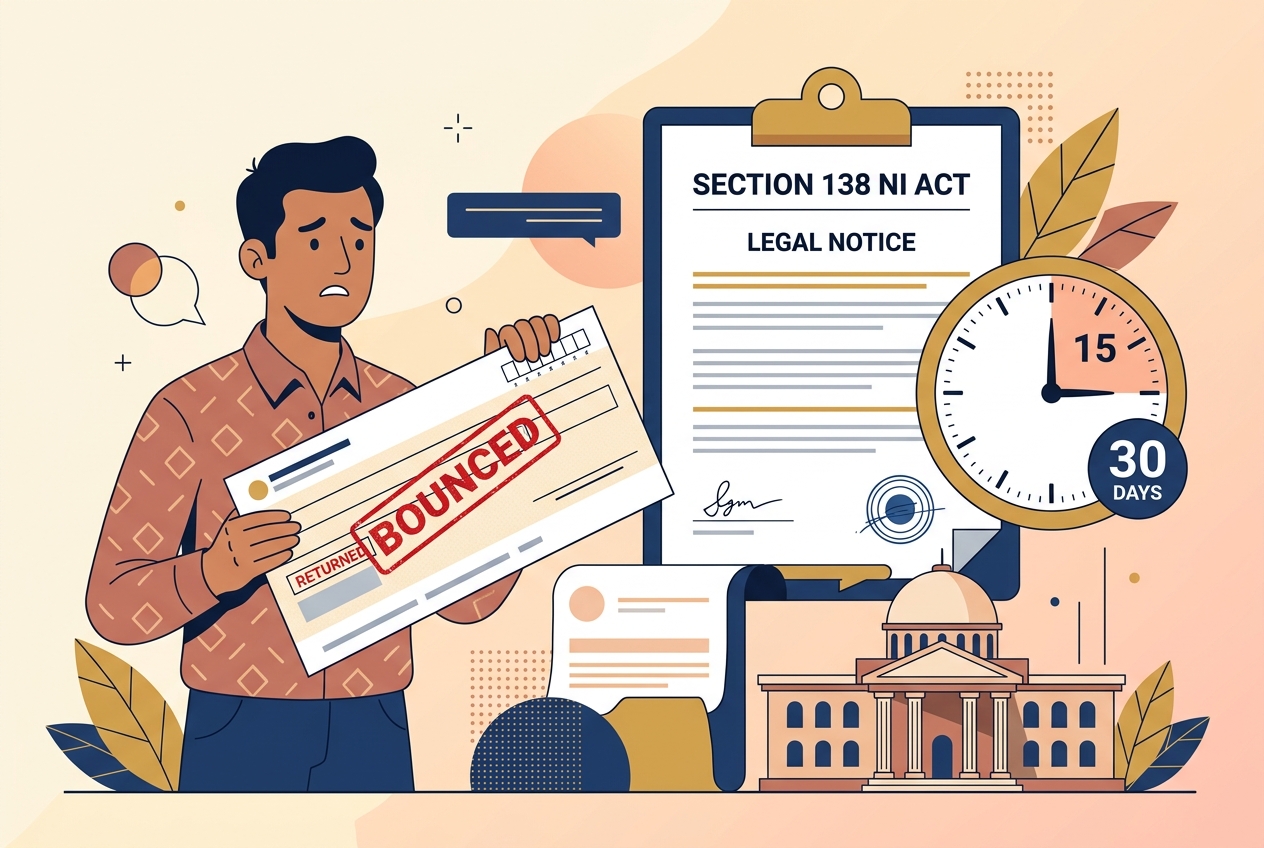
What is an Cheque Bounce Notice Format & Section 138 Ni Act 2026?
A cheque bounce notice is a formal legal demand under Section 138 of the Negotiable Instruments Act 1881, requiring the drawer of a dishonored cheque to make payment within 15 days of receiving the notice.
However, the law requires you to follow a very strict procedure and timeline. Miss a deadline by even one day, and your case could be dismissed.
What is Section 138 of the NI Act?
Section 138 of the Negotiable Instruments Act makes the dishonour of a cheque a criminal offence if:
- The cheque was issued for the discharge of a legally enforceable debt.
- It was returned by the bank unpaid (bounced).
- The drawer (person who signed the cheque) fails to pay within 15 days of receiving a legal notice.
⚖️ Penalties under Section 138
If convicted, the offender can be punished with:
- Imprisonment for up to 2 years.
- A fine of up to twice the amount of the cheque.
- Both imprisonment and fine.
Step-by-Step Procedure for Filing a Cheque Bounce Case
Step 1: Cheque Bounce Memo
When a cheque is dishonoured, the bank issues a "Cheque Return Memo" stating the reason for non-payment (e.g., "Funds Insufficient"). You must collect this memo immediately.
Step 2: Send Legal Notice (Within 30 Days)
You must send a formal legal notice to the drawer within 30 days of receiving the cheque return memo.
What to include:
- Details of the cheque (Number, Date, Amount, Bank).
- Date of dishonour and reason.
- A demand to pay the amount within 15 days of receipt of the notice.
- Statement that legal action will be taken if unpaid.
Step 3: Wait for 15 Days
You cannot file a case immediately. You must give the drawer 15 days from the date they receive the notice to make the payment. If they pay, the matter ends there.
Step 4: File Complaint (Within 30 Days)
If the drawer fails to pay within the 15-day notice period, you must file a criminal complaint before the Magistrate within 30 days from the expiry of the notice period.
Crucial Timelines to Remember
- Cheque Validity: 3 months from the date of issue.
- Notice Deadline: 30 days from notification of bounce.
- Payment Period: 15 days for the drawer to pay.
- Filing Deadline: 30 days after the 15-day payment period expires.
Common Defences Used by Accused
Be prepared. The accused might claim:
- The cheque was for security, not debt.
- The signature is forged.
- The notice was never received (that's why RPAD is essential).
Don't Sign Blindly. Protect Yourself.
Templates are just a start. Use Contract Shield's AI to scan your contract for hidden risks, unfair clauses, and Indian legal compliance issues — in 60 seconds.
Analyze Your Contract Free →Frequently Asked Questions
What is the time limit to send a legal notice for cheque bounce?
You must send a legal notice to the drawer within 30 days of receiving the 'cheque return memo' from the bank. This is subject to the provisions of the Indian Contract Act 1872 and other applicable local regulations, which define the rights, obligations, and legal remedies available to the contracting parties.
What is the punishment for cheque bounce in India?
Under Section 138 of the NI Act, the punishment can be imprisonment for up to 2 years, or a fine which may extend to twice the amount of the cheque, or both. This is subject to the provisions of the Indian Contract Act 1872 and other applicable local regulations, which define the rights, obligations, and legal remedies available to the contracting parties.
Can I file a case immediately after the cheque bounces?
No. You must first send a legal notice demanding payment within 15 days. You can file a complaint in court only if the drawer fails to pay within this 15-day notice period. Under Section 194J of the Income Tax Act 1961, tax at source (TDS) at 10% must be deducted on professional services fees exceeding Rs 30,000 per financial year, failing which the deductor faces interest penalties.
Can a cheque bounce case be settled out of court?
Yes, cheque bounce is a 'compoundable' offence, meaning the parties can agree to settle the matter at any stage, even after the case has been filed in court. Such clauses are subject to the Arbitration and Conciliation Act 1996, which provides the legal framework for domestic arbitration, enforcement of awards, and judicial intervention limits in commercial disputes.
Are electronic signatures legally valid in Indian contracts?
Yes. Under Section 10A of the Information Technology Act 2000, electronic contracts and digital signatures are legally recognized and enforceable. However, certain documents like negotiable instruments, power of attorney, trust deeds, and wills cannot be executed electronically.