Indian Law
E-Contracts in India: IT Act 2000 Section 10A
Is an e-contract valid? Yes, under india code Information Technology Act 2000 section 10a electronic contracts are legally recognized.
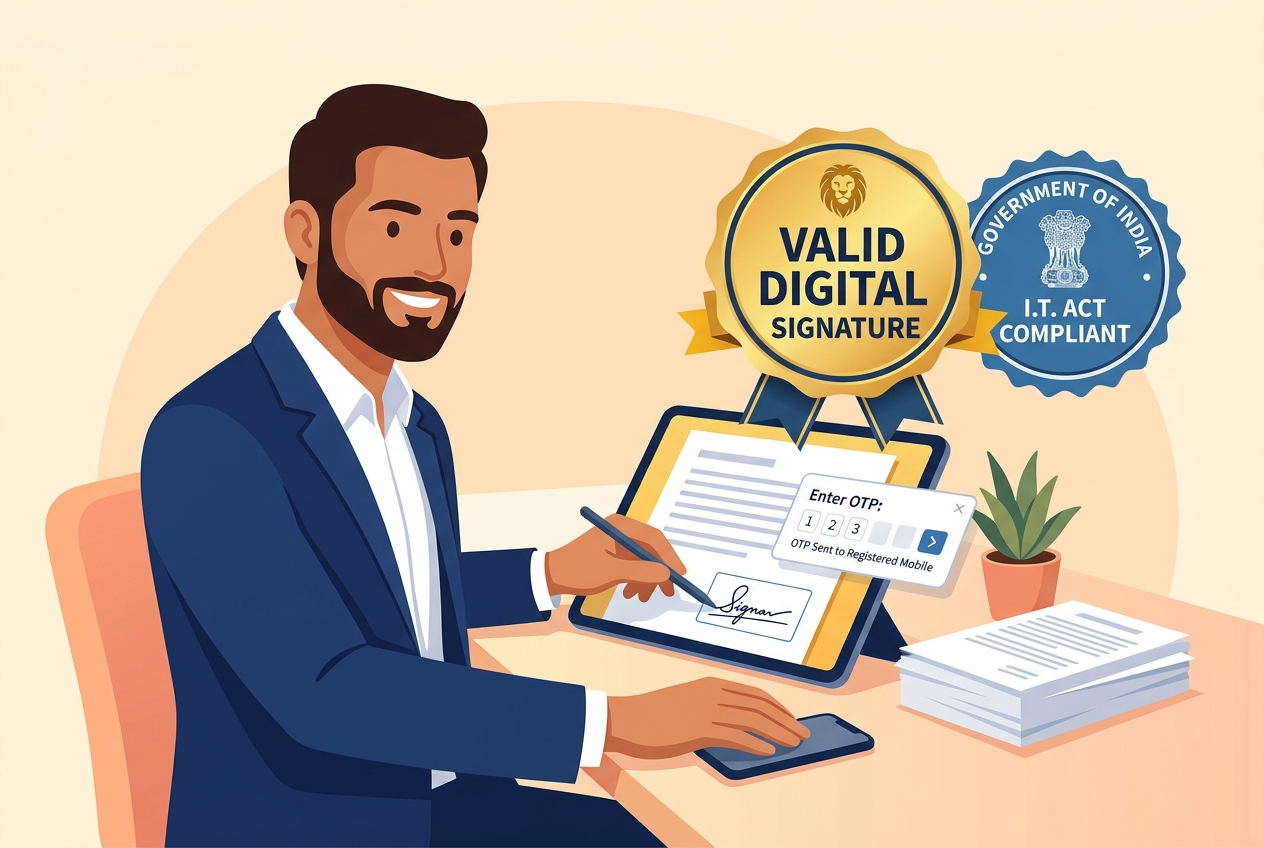
What is an E?
E-contracts are electronic agreements governed by Section 10A of the Information Technology Act 2000 and the Indian Contract Act 1872, rendering digital signatures and click-wrap agreements legally valid.
The short answer is yes. But the long answer involves understanding the Information Technology Act 2000, the Indian Contract Act 1872, and some critical nuances that can make or break your digital agreement.
What is an E-Contract?
An e-contract (electronic contract) is any agreement created and signed through electronic means, without physical paper or wet-ink signatures. It could be a click-wrap agreement on a website, a digitally signed employment offer, or a contract negotiated entirely over email.
Under the Indian Contract Act 1872 (Section 10), a valid contract requires: free consent, competent parties, lawful consideration, and lawful object. The Act doesn't mandate that contracts must be on paper. This opens the door for electronic agreements.
Legal Framework: IT Act 2000
The Information Technology Act 2000 is the backbone of e-contract validity in India. Here's what it establishes:
📋 Section 4 — Legal Recognition of Electronic Records
Any information rendered in electronic form shall not be denied legal effect, validity, or enforceability solely because it is in electronic form.
📋 Section 5 — Legal Recognition of Electronic Signatures
Where a law requires a signature, that requirement is satisfied by an electronic signature affixed in the manner prescribed.
📋 Section 10A — Validity of Contracts Formed Through Electronic Means
A contract shall not be deemed unenforceable solely on the ground that it was formed through electronic communication.
📋 Section 11 — Attribution of Electronic Records
An electronic record is attributed to the originator if it was sent by the originator themselves, or by a person authorized to act on behalf of the originator.
Types of E-Contracts in India
1. Click-Wrap Agreements
The user must actively click "I Agree" or "I Accept" before proceeding. These are the most enforceable type of e-contract because they require affirmative action. Examples include software licenses, SaaS subscriptions, and app terms of service.
2. Browse-Wrap Agreements
Terms are available via a hyperlink on the website, and the user is deemed to have accepted them by simply using the site. These are harder to enforce because the user may never have actually read or noticed the terms. Indian courts have been skeptical of browse-wrap agreements where notice was inadequate.
3. Shrink-Wrap Agreements
Physical products (especially software) where the license terms are enclosed inside the packaging. Opening the package = accepting the terms. While less common in the digital age, these are still encountered with enterprise software.
4. Email-Based Contracts
Contracts formed through email exchanges—offer sent via email, acceptance replied via email. Valid under Indian law as long as the essential elements of a contract are met. Courts have upheld email-based contracts in several landmark decisions.
Exceptions: When E-Contracts Are NOT Valid
The IT Act 2000 (Section 1(4) read with Schedule I) explicitly excludes certain documents from electronic execution:
- ❌ Negotiable Instruments (promissory notes, bills of exchange, cheques) under the Negotiable Instruments Act 1881
- ❌ Power of Attorney under the Powers of Attorney Act 1882
- ❌ Trusts under the Indian Trusts Act 1882 (except wills made by testators)
- ❌ Wills under the Indian Succession Act 1925
- ❌ Any contract for the sale or conveyance of immovable property or any interest in such property
Critical takeaway: You cannot use an electronic contract to sell land, create a trust, or execute a will in India. These still require traditional paper-based execution.
Electronic Signatures vs Digital Signatures
Many people use these terms interchangeably, but they are legally distinct in India:
- Electronic Signature: A broad term covering any electronic method of authentication—typed names, scanned signatures, click-to-sign, biometric authentication. Recognized under Section 3A of the IT Act (added by 2008 amendment).
- Digital Signature: A specific type of electronic signature using asymmetric cryptography and issued by a Certifying Authority licensed by the Controller of Certifying Authorities (CCA). Provides the highest level of legal certainty and non-repudiation.
For high-value contracts and government filings, digital signatures issued by licensed CAs (like eMudhra, Sify, TCS) are recommended. For routine business agreements, Aadhaar-based e-sign or standard electronic signatures are generally sufficient.
Bhartiya Sakshya Adhiniyam 2023: New Evidence Rules
The new Bhartiya Sakshya Adhiniyam (BSA) 2023, which replaced the Indian Evidence Act 1872, has expanded the admissibility of electronic records as evidence. Under Section 63 of BSA (replacing old Section 65B), electronic records are admissible as evidence if accompanied by a certificate identifying the electronic record and describing the manner of its production.
This means your e-contracts can now be more easily presented as evidence in court—provided you maintain proper records of how the contract was formed (timestamps, IP logs, email trails, consent records).
Best Practices for Enforceable E-Contracts
- Use click-wrap over browse-wrap: Always require affirmative consent (checkbox + "I Agree" button)
- Record consent timestamps: Log the exact date, time, IP address, and device when consent was given
- Version your terms: Maintain archives of every version of your terms with effective dates
- Use digital signatures for high-value contracts: Anything above ₹10 lakhs should ideally use a CA-issued digital signature
- Include governing law clause: Specify that Indian law applies and designate jurisdiction
- Get legal review: Have an AI tool or lawyer review the enforceability of your e-contract terms
- Maintain audit trails: Store records of the entire contract lifecycle—creation, negotiation, execution, amendments
Don't Sign Blindly. Protect Yourself.
Templates are just a start. Use Contract Shield's AI to scan your contract for hidden risks, unfair clauses, and Indian legal compliance issues — in 60 seconds.
Analyze Your Contract Free →Landmark Indian Cases on E-Contracts
- Trimex International vs Vedanta Aluminium (2010): The Supreme Court recognized email exchanges as valid contractual communications, holding that a binding contract can be formed through email correspondence.
- Shakti Bhog Foods vs Kola Shipping (2009): The court acknowledged electronic records as admissible evidence in commercial disputes.
- LIC vs Consumer Education (2009): The Supreme Court upheld that electronic policies and terms are enforceable when properly communicated to the policyholder.
Frequently Asked Questions
Are e-contracts legally valid in India?
Yes. Under Section 10A of the IT Act 2000, a contract cannot be deemed unenforceable solely because it was formed through electronic communication. The Indian Contract Act 1872 also does not require contracts to be on paper. This is subject to the provisions of the Indian Contract Act 1872 and other applicable local regulations, which define the rights, obligations, and legal remedies available to the contracting parties.
What types of contracts cannot be executed electronically in India?
Section 1(4) of the IT Act 2000 excludes negotiable instruments, power of attorney, trusts, wills, and contracts for sale or conveyance of immovable property from electronic execution. This is subject to the provisions of the Indian Contract Act 1872 and other applicable local regulations, which define the rights, obligations, and legal remedies available to the contracting parties.
What is the difference between electronic signature and digital signature in India?
An electronic signature is a broad term covering any e-authentication method (typed names, scanned signatures, click-to-sign). A digital signature uses asymmetric cryptography issued by a licensed Certifying Authority, providing higher legal certainty and non-repudiation. Specifically, Section 17 of the Copyright Act 1957 stipulates that the creator is the first owner of copyright unless there is a written contract assigning these rights to another entity, such as an employer or client.
Which type of e-contract is most enforceable?
Click-wrap agreements are the most enforceable because they require the user to take affirmative action (clicking I Agree). Browse-wrap agreements, where terms are merely linked, are harder to enforce in Indian courts. According to Section 10 of the Indian Contract Act 1872, agreements are enforceable only when executed with the free consent of parties competent to contract, for a lawful consideration, and with a lawful object.
Are electronic signatures legally valid in Indian contracts?
Yes. Under Section 10A of the Information Technology Act 2000, electronic contracts and digital signatures are legally recognized and enforceable. However, certain documents like negotiable instruments, power of attorney, trust deeds, and wills cannot be executed electronically.