Copyright vs Patent vs Trademark: What Does Your Startup Need?
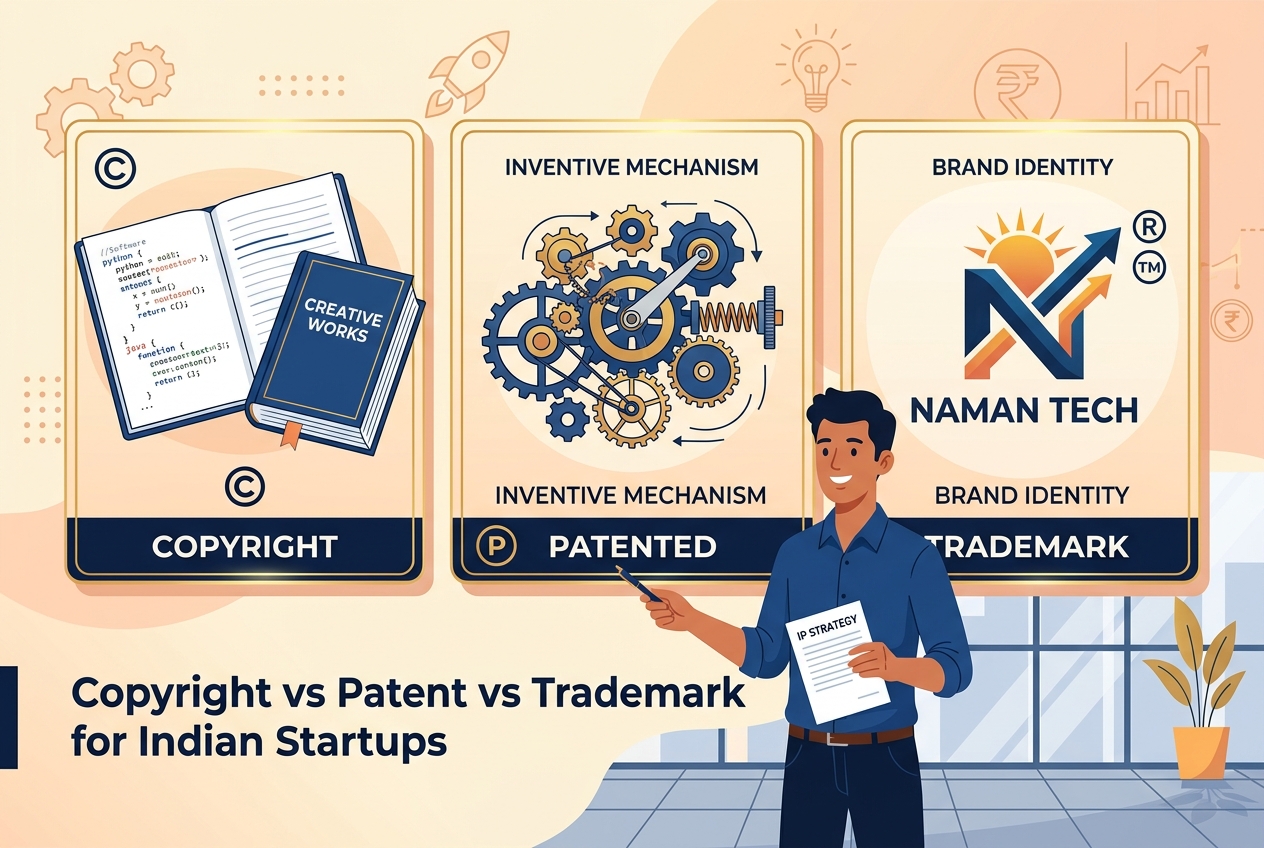
What is an Copyright Vs Patent Vs Trademark?
Copyright protects original creative works under the Copyright Act 1957; patents protect novel, non-obvious industrial inventions under the Patents Act 1970; and trademarks protect brand assets under the Trade Marks Act 1999.
Intellectual Property (IP) law in India is divided into three main buckets: Trademark, Copyright, and Patent. Knowing the difference is crucial because they protect completely different assets of your business. Mixing them up can leave your code, your brand, or your invention vulnerable to theft.
Quick Comparison Table
| Feature | Trademark (TM) | Copyright (©) | Patent |
|---|---|---|---|
| Protects | Brand Identity (Name, Logo, Slogan) | Creative Work (Code, Design, Content) | Inventions (New Process, Machine) |
| Goal | Prevent brand confusion | Prevent copying of expression | Monopoly on technology |
| Validity | 10 Years (Renewable forever) | 60 Years (Lifetime + 60) | 20 Years (Non-renewable) |
| Cost | Moderate (₹4.5k - ₹9k) | Low (₹500 - ₹2k) | High (₹50k - ₹2L+) |
1. Trademark: Protecting Your Brand
A trademark is all about identity. It protects the symbols, names, and slogans that customers use to identify your business.
- What it protects: Brand names (e.g., "Contract Shield"), Logos (Nike Swoosh), Taglines ("Just Do It").
- What it does NOT protect: The actual product itself or the idea behind your business.
- Example: You can trademark the name "Uber", but you cannot trademark the concept of "taxi booking via app".
2. Copyright: Protecting Your Content & Code
Copyright protects original artistic, literary, and musical works. In the tech world, this is critical for software source code.
- What it protects: Source code, website design, UI/UX elements, blog posts, marketing videos.
- Automatic Protection: Unlike trademarks and patents, copyright exists the moment you create the work. However, registration is recommended for legal evidence.
- Example: J.K. Rowling has copyright over the Harry Potter books. You cannot rewrite them and sell them, but you can write a story about a wizard school (as long as it's not a copy).
3. Patent: Protecting Your Invention
Patents are the strongest but most expensive form of IP. They give you a temporary monopoly on a new utility, machine, or process.
- What it protects: A new pharmaceutical drug, a specialized machine, or a complex technical process.
- The "Novelty" Test: Your invention must be globally new, non-obvious, and have industrial application.
- Software Patents: In India, "software per se" is not patentable (Section 3(k) of Patent Act). It must be coupled with hardware or a unique technical effect.
Frequently Asked Questions (FAQ)
Can I copyright an idea?
No. Copyright only protects the expression of an idea, not the idea itself. You can copyright the code for your app, but not the idea of what the app does.
Is software patentable in India?
Generally, no. Algorithms and computer programs 'per se' are excluded. However, if the software controls a physical device or produces a tangible technical effect, it might be patentable.
Do I need a lawyer for IP registration?
Copyright and Trademark filings can be done yourself, though professional help is advised for objections. Patent filing is highly technical and virtually requires a Patent Agent.
Don't Sign Blindly. Protect Yourself.
Templates are just a start. Use Contract Shield's AI to scan your contract for hidden risks, unfair clauses, and Indian legal compliance issues — in 60 seconds.
Analyze Your Contract Free →