Employment
How to Send a Legal Notice for Non-Payment of Dues
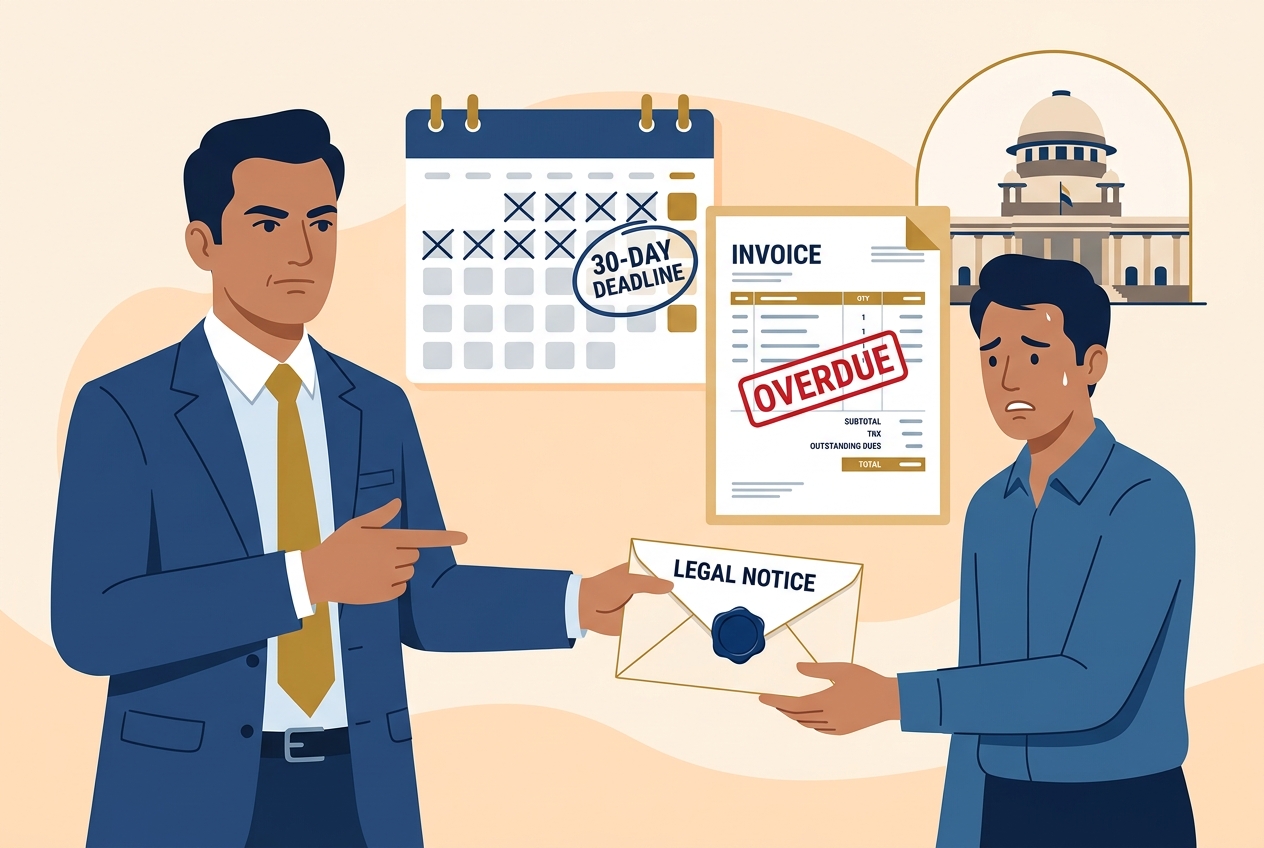
What is a Legal Notice for Non-Payment?
A legal notice for non payment of dues is a formal communication sent by a creditor or lawyer to a debtor, demanding payment of outstanding money within a specific timeframe before initiating legal action.
When Should You Send a Legal Notice?
If a client or vendor has ignored your invoices and reminders, sending a legal notice is the first step towards recovering your money. It serves as a final warning and builds a paper trail for future litigation.
What Must Be Included?
- Details of the Parties: Names and addresses of both the sender and the defaulter.
- Summary of Transactions: Dates, invoice numbers, and the total outstanding amount.
- Demand for Payment: A clear deadline (usually 15 to 30 days) to clear the dues.
- Consequences of Non-Compliance: A statement that civil or criminal proceedings will be initiated if payment is not received.
Prevent Payment Defaults
Ensure your contracts have iron-clad payment and penalty clauses before you sign them.
Analyze Payment Clauses →What Is a Legal Notice for Non-Payment of Dues?
A legal notice for non-payment of dues is a formal written communication sent by a creditor (or their lawyer) to a debtor demanding payment of outstanding amounts before initiating legal proceedings. In India, sending such a notice is often a prerequisite before filing a civil suit under the Code of Civil Procedure, 1908 (CPC), or a criminal complaint under the Negotiable Instruments Act (for cheque bounce) or the BNS (for criminal breach of contract).
Legal Framework Governing Non-Payment Notices in India
- Section 80, CPC: Requires 2 months' notice before filing a suit against the Central or State Government or a public officer. No such mandatory pre-notice period applies for suits against private parties — but sending one is still best practice.
- Section 138, Negotiable Instruments Act, 1881: For cheque bounce cases, a specific demand notice must be sent within 30 days of the cheque being returned by the bank. The debtor has 15 days to pay before a criminal complaint can be filed.
- MSME Samadhaan: For dues owed to MSME suppliers under the MSME Development Act 2006, the supplier can directly file for conciliation/arbitration with the MSME Facilitation Council — a legal notice is the first step.
- Insolvency & Bankruptcy Code (IBC): A creditor seeking to initiate Corporate Insolvency Resolution Process (CIRP) must serve a demand notice under Section 8 (for operational creditors) giving the debtor 10 days to dispute or pay.
Key Elements of a Valid Legal Notice for Non-Payment
Identification of Parties
Full legal names and addresses of both the sender (creditor/claimant) and recipient (debtor/respondent). For companies, include the registered office address and CIN.
Specific Amount Claimed
State the exact principal amount outstanding, the basis for the claim (invoice numbers, contract clause, dates), and any interest accrued. Vague demands ("substantial amounts are owed") weaken the notice.
Legal Basis
Cite the specific contract clause, statutory provision, or common law right that creates the obligation to pay. Reference the governing law clause in the underlying contract.
Demand and Deadline
State clearly what you are demanding (payment of ₹X by [date]) and what action you will take if the demand is not met (civil suit, criminal complaint, IBC filing, etc.).
Sent by Registered Post / Speed Post
Always send legal notices by registered post with acknowledgment due (RPAD) or through a process server. Email alone is insufficient for establishing proof of service, though it can supplement.
Interest on Delayed Payments: Your Rights Under Indian Law
Beyond the principal amount, Indian law entitles creditors to claim interest on delayed payments in most commercial contexts:
- MSME suppliers: Under the MSMED Act 2006, interest at 3× the RBI bank rate (currently ~17.5% per annum) accrues automatically from the due date — no prior agreement needed.
- Commercial contracts: Contractually stipulated interest applies. In absence of a contract rate, courts award interest under Section 34 of the CPC at rates typically between 6–18% per annum.
- Cheque bounce: After filing a complaint under Section 138 NI Act, courts can award the cheque amount plus 20% interim compensation under Section 143A.
Steps After Sending a Legal Notice
| Day | Action |
|---|---|
| Day 0 | Send legal notice via RPAD + email (for record) |
| Day 1–15 | Wait for response; negotiate if settlement is offered |
| Day 15–30 | If no payment: prepare civil suit / cheque bounce complaint / IBC filing |
| Day 30+ | File before appropriate court / NCLT / MSME Facilitation Council |
Draft a Legal Notice for Non-Payment
Contract Shield helps you understand your rights and identify the relevant clauses in your agreements before you instruct a lawyer to send a legal notice.
Analyze My Contract →Frequently Asked Questions
Are non-compete clauses valid in India?
Under Section 27 of the Indian Contract Act, 1872, any agreement that restrains anyone from exercising a lawful profession, trade, or business is void. This means post-employment non-competes are generally unenforceable in India. According to Section 10 of the Indian Contract Act 1872, agreements are enforceable only when executed with the free consent of parties competent to contract, for a lawful consideration, and with a lawful object.
What is the standard notice period in India?
Typically, notice periods range from 30 to 90 days. For employees on probation, it's often shorter (15-30 days). This is subject to the provisions of the Indian Contract Act 1872 and other applicable local regulations, which define the rights, obligations, and legal remedies available to the contracting parties. This is subject to the provisions of the Indian Contract Act 1872 and other applicable local regulations, which define the rights, obligations, and legal remedies available to the contracting parties.
Can an employer reduce my salary during the contract term?
Generally, no. A unilateral reduction in salary without a corresponding amendment signed by the employee can be challenged as a breach of contract. This is subject to the provisions of the Indian Contract Act 1872 and other applicable local regulations, which define the rights, obligations, and legal remedies available to the contracting parties.
Are electronic signatures legally valid in Indian contracts?
Yes. Under Section 10A of the Information Technology Act 2000, electronic contracts and digital signatures are legally recognized and enforceable. However, certain documents like negotiable instruments, power of attorney, trust deeds, and wills cannot be executed electronically.