SaaS & Tech
SaaS Agreement Checklist: Key Clauses to Review
When reviewing vendor contracts, a saas agreement checklist is essential to ensure data privacy, uptime SLAs, and limitation of liability clauses are balanced.
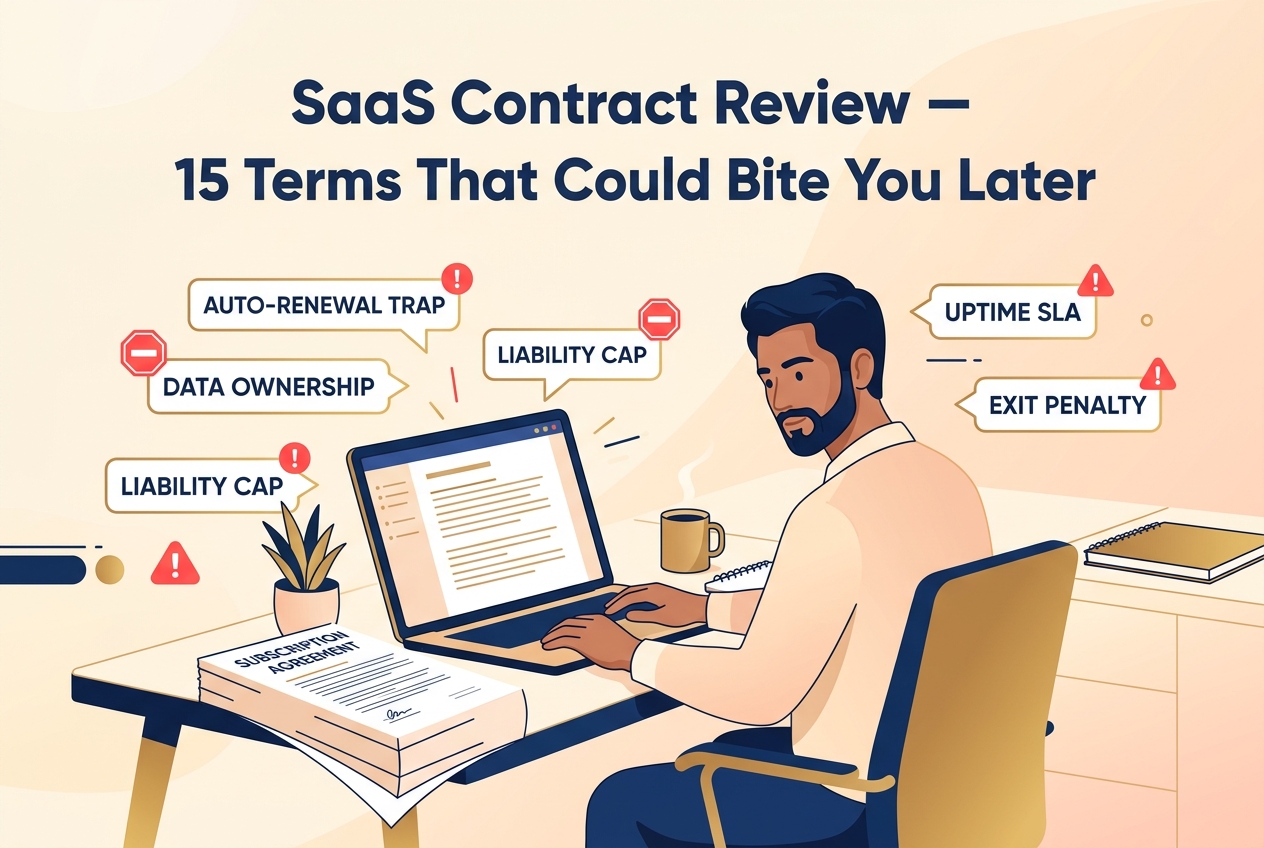
What is an Saas Contract?
A SaaS subscription agreement is a legal contract defining software licensing rights, service level agreements (SLAs), data hosting security, payment structures, and renewal terms.
Pricing & Billing Terms
- Price Increase Clauses: Can they raise prices mid-contract? Look for caps or advance notice requirements.
- Auto-Renewal: Most SaaS auto-renews. Know the cancellation window—often 30-60 days before renewal.
- Usage Overages: What happens if you exceed limits? Overage fees can be brutal.
- Billing Disputes: How long do you have to dispute charges? Often only 30 days.
Data & Security Terms
- Data Ownership: Who owns the data you put into the system? (Should be you.)
- Data Portability: Can you export your data? In what format? At what cost?
- Security Standards: What certifications do they have? (SOC 2, ISO 27001, etc.)
- Breach Notification: How quickly will they notify you of a security incident?
- Data Location: Where is your data stored? This matters for compliance.
Regulatory Spotlight: DPDP Act 2023
Under the **Digital Personal Data Protection Act, 2023**, SaaS vendors (Data Processors) have new statutory obligations. Ensure your agreement explicitly covers data breach reporting and "Purpose Limitation" to stay compliant with Indian law.
Service & Support Terms
- Uptime SLA: 99.9% sounds good, but that's still 8+ hours of downtime per year.
- SLA Credits: What remedy do you get for downtime? Often just service credits, not refunds.
- Support Response Times: Is support guaranteed? What are the response windows?
Exit & Termination Terms
- Early Termination Fees: Can you exit early? At what cost?
- Data Retention After Cancellation: How long do they keep your data? Can you get it out?
- Transition Assistance: Will they help you migrate to a new system?
SaaS Contract Checklist
Before signing any SaaS contract, confirm these 6 points:
- Data Ownership: You own your data and can export it anytime.
- Format: Data export is in a usable standard format (CSV, JSON).
- Price Protection: Price increases require at least 30 days notice.
- Uptime SLA: 99.5%+ uptime guaranteed with service credit remedies.
- Exit Strategy: Clear cancellation process with no hidden fees.
- No Auto-Renewal Traps: Opt-out is simple and clear.
Don't Sign Blindly. Protect Yourself.
Templates are just a start. Use Contract Shield's AI to scan your contract for hidden risks, unfair clauses, and Indian legal compliance issues — in 60 seconds.
Analyze Your Contract Free →Frequently Asked Questions
What is a DPA in a SaaS agreement?
A Data Processing Agreement (DPA) is a legally binding document that outlines the roles and responsibilities of the data fiduciary and data processor, especially under India's new DPDP Act 2023. According to Section 10 of the Indian Contract Act 1872, agreements are enforceable only when executed with the free consent of parties competent to contract, for a lawful consideration, and with a lawful object.
How do I avoid SaaS auto-renewal traps?
Negotiate to include a 'Notice of Renewal' clause where the vendor must email you 30 days before the cancellation window closes. Our AI extracts these dates for you automatically. Such clauses are subject to the Arbitration and Conciliation Act 1996, which provides the legal framework for domestic arbitration, enforcement of awards, and judicial intervention limits in commercial disputes.
Are SLA credits useful for business loss?
SLA credits (e.g., 5% off next month's bill) rarely cover the actual loss of business during downtime. Try to negotiate for higher liability caps if uptime is critical to your revenue. This is subject to the provisions of the Indian Contract Act 1872 and other applicable local regulations, which define the rights, obligations, and legal remedies available to the contracting parties.
Are electronic signatures legally valid in Indian contracts?
Yes. Under Section 10A of the Information Technology Act 2000, electronic contracts and digital signatures are legally recognized and enforceable. However, certain documents like negotiable instruments, power of attorney, trust deeds, and wills cannot be executed electronically.