Trade Secret Protection in India: How to Safe-Guard Your Business Data
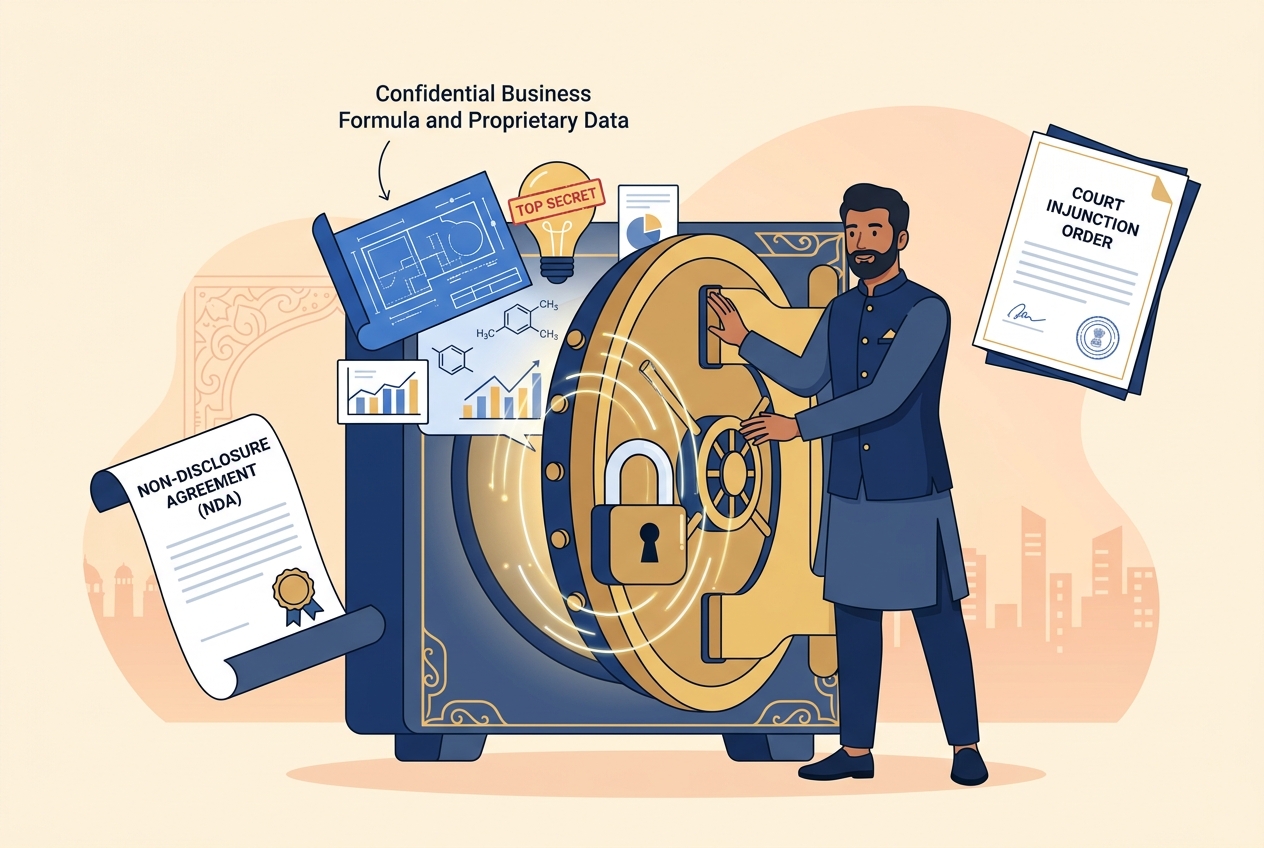
What is an Trade Secret Protection In?
Trade secret protection in India relies on common law, breach of confidence principles, and confidentiality agreements, as there is no specific statutory trade secret act.
For tech companies, your pricing algorithms, client lists, and marketing strategies are your biggest assets. But unlike the US, India does not have a specific "Trade Secret Act". So, how do you protect them?
1. What Qualifies as a Trade Secret?
Not every piece of information is a trade secret. To qualify, it must generally meet three criteria (based on TRIPS Agreement Art. 39):
- It is secret: Not known to the general public or experts in the field.
- It has commercial value: The secrecy gives you an economic advantage over competitors.
- Reasonable steps taken: You have actively tried to keep it secret (e.g., restricted access, NDAs).
2. The Role of Non-Disclosure Agreements (NDAs)
Since there is no statutory law, your contract is your primary weapon. A robust NDA is non-negotiable for employees, vendors, and investors.
- Definition of Confidential Information: Must be broad enough to cover data, code, and plans, but specific enough to be enforceable.
- Obligations: Clearly state that the recipient cannot use the info for their own benefit or share it with others.
- Term: Make sure the confidentiality obligation survives the termination of the agreement (often indefinitely for trade secrets).
3. Employee Contracts & Data Theft
Most trade secret theft happens from the inside. Your employment agreements must include:
- Confidentiality Clause: Binding the employee to secrecy during and after employment.
- Non-Compete Clause: While Section 27 makes post-employment non-competes hard to enforce, they can be valid regarding specific trade secrets (e.g., not joining a competitor to use specific proprietary data).
- Exit Procedures: Retrieval of all devices, data, and access credentials upon resignation.
4. Legal Remedies for Breach
If someone steals your trade secret, you can approach the court for:
- Injunction: A court order stopping them from using or sharing the secret immediately.
- Damages: Financial compensation for the loss suffered.
- Criminal Action: Under the IT Act (Section 43, 66) for data theft or hacking, and IPC (Section 378/405) for theft or criminal breach of trust.
5. Best Practices Checklist
- Label Everything: Mark documents "Confidential" or "Strictly Private".
- Limit Access: Use "Need-to-Know" basis permissions for sensitive folders.
- Digital Rights Management (DRM): Disable printing/copying for critical files.
- Regular Audits: Track who is accessing what data.
Frequently Asked Questions (FAQ)
Is a trade secret better than a patent?
It depends. Patents disclose your invention to the world in exchange for 20 years of monopoly. Trade secrets keep it hidden forever but offer no protection if someone else independently invents it.
Can I sue an ex-employee for joining a competitor?
You generally cannot stop them from joining a competitor (Right to Livelihood), but you can sue them if they use your confidential data or trade secrets in their new job.
Does the NDA need to be stamped?
To be admissible as evidence in court, an NDA should be on stamped paper of appropriate value (varies by state). Unstamped agreements can face penalties.
Don't Sign Blindly. Protect Yourself.
Templates are just a start. Use Contract Shield's AI to scan your contract for hidden risks, unfair clauses, and Indian legal compliance issues — in 60 seconds.
Analyze Your Contract Free →