Dispute Resolution
Legal Notice for Recovery of Dues in India: Format & Process
What is an Legal Notice For Recovery Of Dues In?
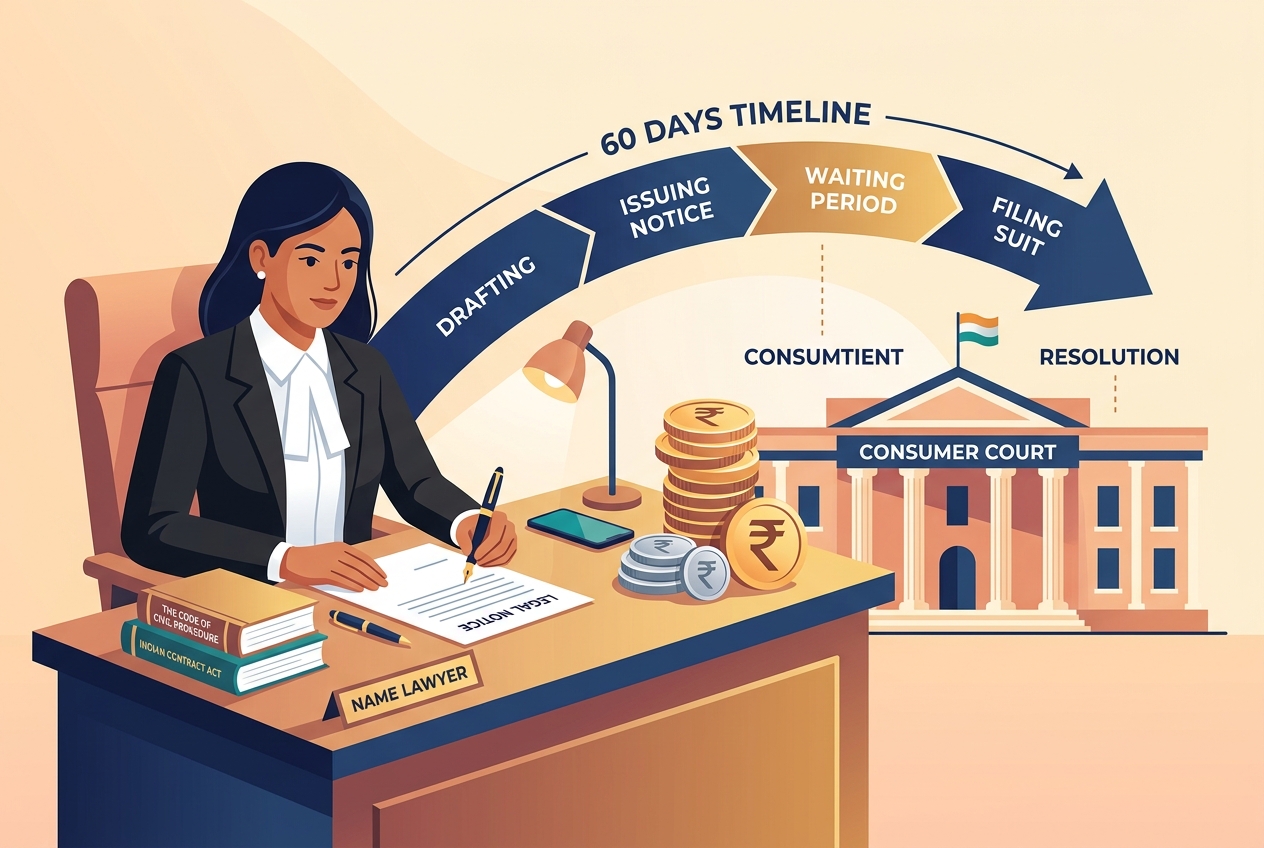
A legal notice for recovery of dues is a formal letter demanding payment of outstanding debt, outlining the dispute, the legal basis, and a final notice period before initiating civil litigation.
A legal notice is not just a threat; it's a formal communication that puts the defaulter on notice that legal action will follow if dues aren't cleared. In many cases, a well-drafted notice is enough to recover money without entering a courtroom.
What is a Legal Notice for Recovery of Dues?
A legal notice is a formal written intimation sent by an aggrieved party (you) to the defaulter (the person/company who owes money). It warns them of your intention to initiate legal proceedings if the payment is not made within a specific period (usually 15 to 30 days).
It serves two main purposes:
- Final Warning: It gives the debtor one last chance to settle the dispute amicably.
- Legal Evidence: It proves in court that you tried to resolve the matter before filing a suit.
When Should You Send a Legal Notice?
You shouldn't send a legal notice for a 2-day delay. It's a serious step. Consider sending one when:
- An invoice remains unpaid significantly past the due date (e.g., 30-60 days).
- The debtor stops responding to calls and emails ("ghosting").
- A cheque issued by the debtor has bounced (dishonoured).
- The debtor explicitly refuses to pay without valid grounds.
⚠️ Important: Limitation Period
Under the Limitation Act 1963, the time limit to file a suit for recovery of money is 3 years from the date the cause of action arose (e.g., the invoice due date). If you wait longer than 3 years, your claim becomes "time-barred" and cannot be enforced in court.
Essential Components of a Legal Notice
While you can draft a notice yourself, having it on a lawyer's letterhead carries more weight. A valid legal notice must contain:
- Name and Address: Complete details of both the sender (you) and the receiver (debtor).
- Cause of Action: A clear narrative of the transaction—what goods/services were provided, when, and the agreed cost.
- Evidence of Debt: Reference to specific invoice numbers, purchase orders, or contracts.
- Details of Default: How much is owed, since when, and communication attempts made.
- Demand for Payment: A clear demand for the principal amount plus any applicable interest (usually 18% p.a. for commercial dues).
- Time Limit: A specific deadline (e.g., "within 15 days of receipt of this notice").
- Legal Consequence: A statement that failure to pay will result in civil/criminal legal action.
Options After sending the Notice
If the debtor pays, great! If not, here are your legal options in India:
1. Summary Suit (Order 37 CPC)
For clear-cut cases based on written contracts or invoices, you can file a Summary Suit under Order 37 of the Code of Civil Procedure. This is faster than a regular trial because the defendant isn't automatically allowed to defend themselves; they must first seek the court's permission.
2. MSME Samadhaan
If you are a registered MSME, you can file a complaint on the MSME Samadhaan portal. This is a powerful tool where the Micro and Small Enterprise Facilitation Council (MSEFC) can mediate and arbitrate. MSMEs are entitled to compound interest at 3 times the bank rate for delayed payments.
3. Insolvency Petition (IBC)
If the debt exceeds ₹1 Crore (for corporate debtors), you can file an application under the Insolvency and Bankruptcy Code (IBC). The threat of insolvency often pushes companies to settle dues quickly.
4. Cheque Bounce Case (Section 138)
If the debt involves a bounced cheque, you can file a criminal case under Section 138 of the Negotiable Instruments Act. This carries a penalty of up to 2 years imprisonment or twice the cheque amount.
Don't Sign Blindly. Protect Yourself.
Templates are just a start. Use Contract Shield's AI to scan your contract for hidden risks, unfair clauses, and Indian legal compliance issues — in 60 seconds.
Analyze Your Contract Free →Frequently Asked Questions
Is a legal notice mandatory for recovery of money?
Yes, in most cases. A legal notice acts as a final warning and is often a prerequisite before filing a civil recovery suit or a winding-up petition under the Insolvency and Bankruptcy Code (IBC). This is subject to the provisions of the Indian Contract Act 1872 and other applicable local regulations, which define the rights, obligations, and legal remedies available to the contracting parties.
What is the time limit to file a suit for recovery of money?
The limitation period for filing a suit for recovery of money is 3 years from the date the cause of action arose (e.g., the date the invoice became due or the last payment was made). Under Section 194J of the Income Tax Act 1961, tax at source (TDS) at 10% must be deducted on professional services fees exceeding Rs 30,000 per financial year, failing which the deductor faces interest penalties.
Can I send a legal notice via email?
Yes, legal notices sent via email are valid in India. However, it is highly recommended to also send a physical copy via Registered Post with Acknowledgment Due (RPAD) to have concrete proof of delivery. According to Section 10 of the Indian Contract Act 1872, agreements are enforceable only when executed with the free consent of parties competent to contract, for a lawful consideration, and with a lawful object.
What if the debtor ignores the legal notice?
If the debtor fails to pay or respond within the stipulated time (usually 15-30 days), you can proceed to file a civil suit for recovery, a complaint under MSME Samadhaan (if eligible), or initiate insolvency proceedings. Sections 15 and 16 of the MSMED Act 2006 mandate payment to registered MSMEs within 45 days, failing which the buyer is liable to pay compound interest at three times the bank rate notified by the RBI.
Are electronic signatures legally valid in Indian contracts?
Yes. Under Section 10A of the Information Technology Act 2000, electronic contracts and digital signatures are legally recognized and enforceable. However, certain documents like negotiable instruments, power of attorney, trust deeds, and wills cannot be executed electronically.