Contract Law
Contract Termination Rights in India: When & How You Can Exit
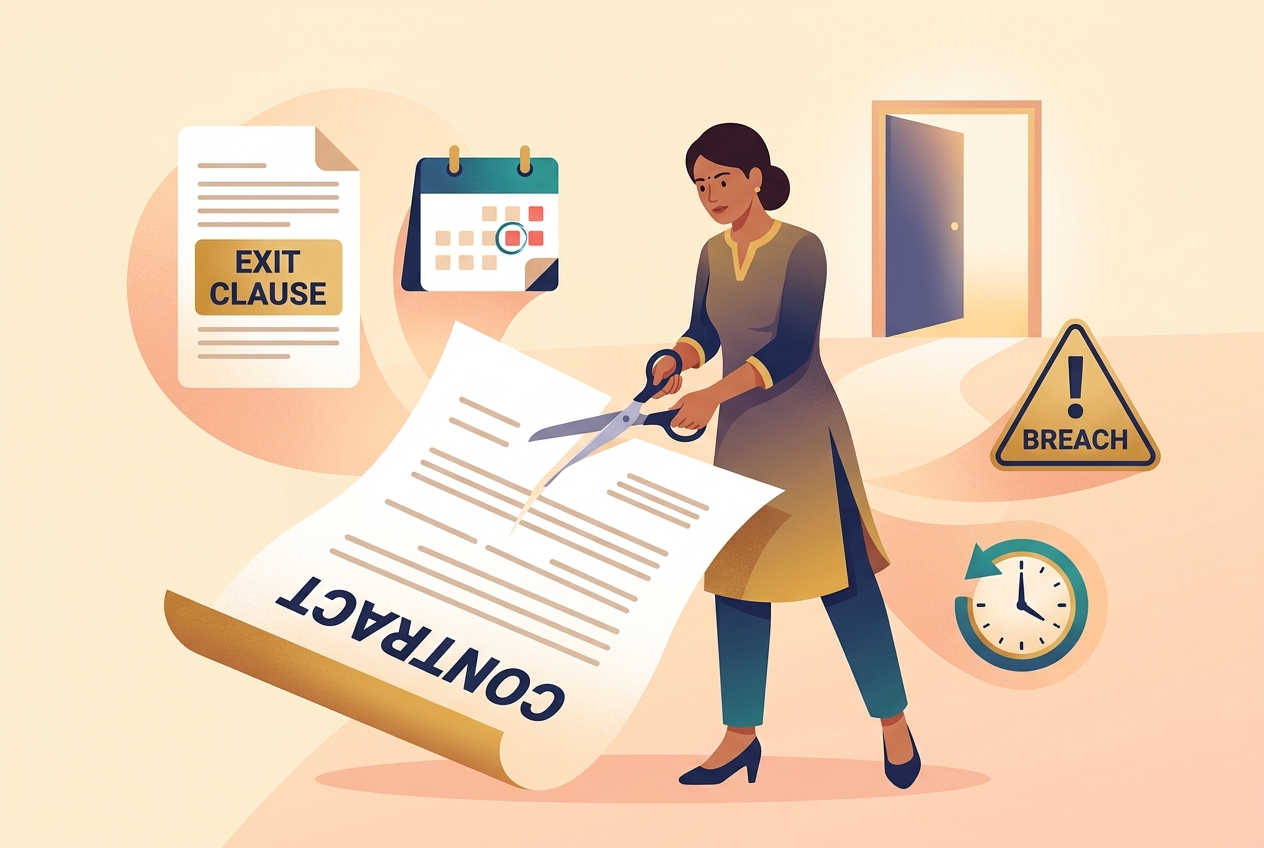
What is an Contract Termination Rights In?
Contract termination rights are clauses under the Indian Contract Act 1872 that allow parties to end an agreement for convenience or for cause (such as a material breach or bankruptcy).
Grounds for Terminating a Contract
🔓 1. Mutual Agreement
Both parties agree to end the contract early. This is the cleanest exit. Execute a formal termination agreement covering: effective date, outstanding obligations, final payments, return of confidential information, and survival of specific clauses.
🔓 2. Termination for Cause (Material Breach)
When the other party materially breaches their obligations. Under Section 39, if one party refuses to perform or makes performance impossible, the other party is discharged from their obligations. Always provide written notice and a cure period (typically 15-30 days).
🔓 3. Termination for Convenience
Many contracts include a "termination for convenience" clause allowing either party to exit without cause, typically with 30-90 days' notice. May include early termination fees or penalties. Must be explicitly stated in the contract.
🔓 4. Frustration of Contract (Section 56)
The contract becomes impossible to perform due to an event beyond either party's control (natural disaster, law change, death of essential party). The contract is automatically void. No party is liable for non-performance. Key case: Satyabrata Ghose v. Mugneeram (1954).
🔓 5. Voidable Contract (Sections 19-19A)
If consent was obtained through coercion, undue influence, fraud, or misrepresentation, the aggrieved party can void the contract. Must exercise this right within a reasonable time of discovering the issue.
🔓 6. Expiry of Term
The contract naturally ends when its term expires. Check for auto-renewal clauses , many contracts renew automatically unless terminated with prior notice before the expiry date.
How to Terminate: Step-by-Step
- Review the termination clause: Check notice period, cure period, and any termination fees
- Document the breach: If terminating for cause, gather evidence of the breach
- Send written notice: Follow the exact notice method specified (registered post, email, courier)
- Allow cure period: Give the other party time to fix the breach (if required by contract)
- Execute termination: Send formal termination letter referencing the specific clause
- Settle pending obligations: Clear outstanding payments, return property/information
- Document everything: Keep copies of all correspondence for potential disputes
What Survives Termination?
Even after termination, these clauses typically continue ("survival clauses"):
- ✅ Confidentiality obligations
- ✅ IP ownership provisions
- ✅ Indemnification obligations
- ✅ Dispute resolution mechanism
- ✅ Non-solicitation (for the specified period)
- ✅ Any accrued payment obligations
Wrongful Termination: When You Can't Exit
Terminating without proper grounds or without following the prescribed process is wrongful termination. Consequences include:
- The other party can sue for damages (Section 73-74)
- They can seek specific performance (court order forcing you to perform)
- They can claim lost profits and consequential damages
- Liquidated damages/penalty clauses may be triggered
Don't Sign Blindly. Protect Yourself.
Templates are just a start. Use Contract Shield's AI to scan your contract for hidden risks, unfair clauses, and Indian legal compliance issues — in 60 seconds.
Analyze Your Contract Free →Key Takeaways
- ✅ Mutual termination is the cleanest exit , always try this first
- ✅ Material breach + written notice + cure period = proper termination for cause
- ✅ Section 56 (frustration) makes contracts void when performance becomes impossible
- ✅ Check for auto-renewal clauses before contract expiry
- ✅ Wrongful termination exposes you to damages and specific performance claims
- ✅ Always follow the exact termination process specified in the contract
Frequently Asked Questions
Can a contract be terminated without a termination clause?
Yes. A contract can be terminated by mutual agreement, material breach, impossibility or unlawfulness (frustration under Section 56), or by operation of law. According to Section 10 of the Indian Contract Act 1872, agreements are enforceable only when executed with the free consent of parties competent to contract, for a lawful consideration, and with a lawful object.
What is the difference between termination and rescission?
Termination ends the contract prospectively from the termination date. Rescission unwinds the contract retroactively as if it never existed, restoring both parties to their pre-contract position. This is subject to the provisions of the Indian Contract Act 1872 and other applicable local regulations, which define the rights, obligations, and legal remedies available to the contracting parties.
What notice period is required for contract termination in India?
It depends on the contract. If silent, reasonable notice is required. Courts typically consider 30-90 days as reasonable for commercial contracts. Such clauses are subject to the Arbitration and Conciliation Act 1996, which provides the legal framework for domestic arbitration, enforcement of awards, and judicial intervention limits in commercial disputes.
Can I terminate a contract for convenience?
Only if the contract includes a termination for convenience clause. Without it, you can only terminate for cause. These clauses typically require a notice period and may include termination fees. Under Section 194J of the Income Tax Act 1961, tax at source (TDS) at 10% must be deducted on professional services fees exceeding Rs 30,000 per financial year, failing which the deductor faces interest penalties.
Are electronic signatures legally valid in Indian contracts?
Yes. Under Section 10A of the Information Technology Act 2000, electronic contracts and digital signatures are legally recognized and enforceable. However, certain documents like negotiable instruments, power of attorney, trust deeds, and wills cannot be executed electronically.